Tile Adhesive for Vitrified Tiles: Cement vs Adhesive Explained
Choosing an attractive vitrified tile is only one part of a successful installation. What holds the tile to the floor or wall is equally important.
Because vitrified tiles have relatively low water absorption, the fixing material needs to provide suitable bonding for the tile, substrate and installation conditions. This is why choosing the correct Tile Adhesive for Vitrified Tiles should be part of the planning process before installation begins.
Here are seven important points to understand.
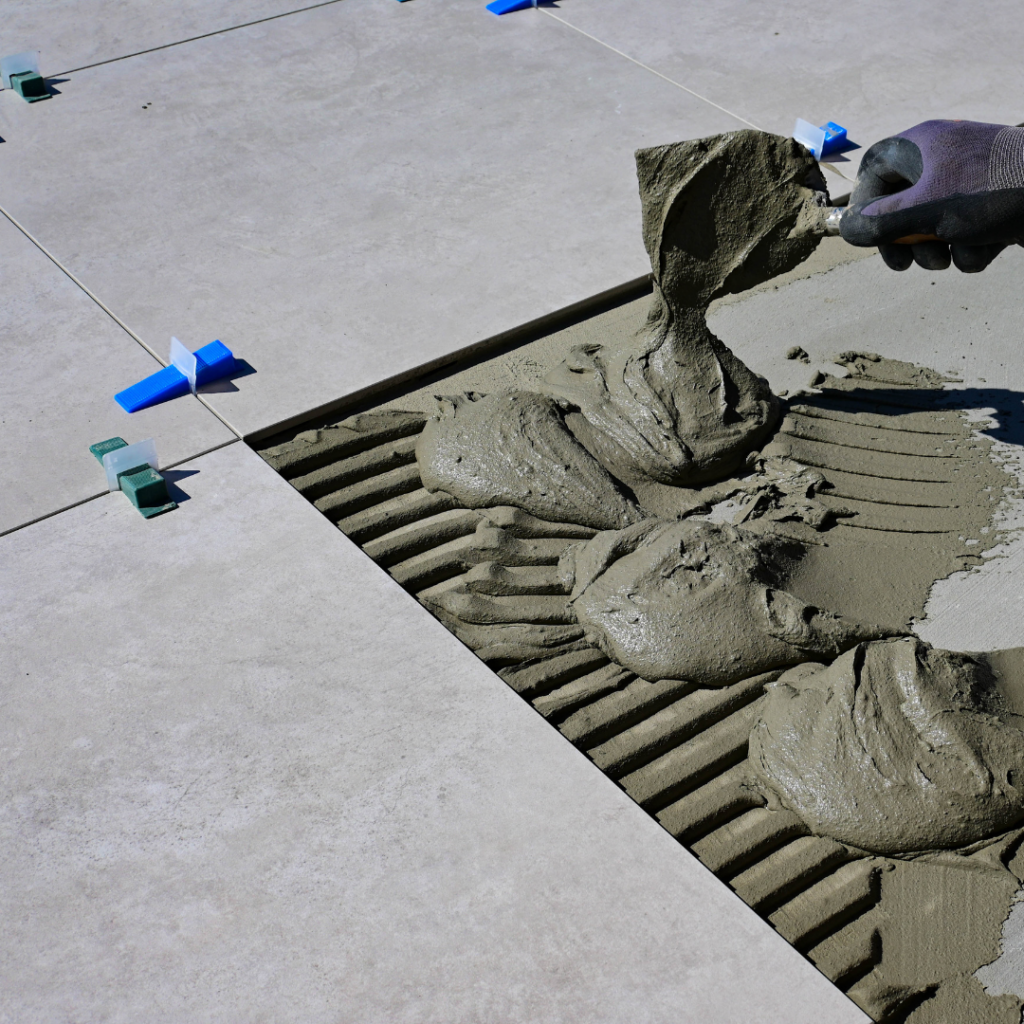
1. Why Do Vitrified Tiles Need the Right Adhesive?
Vitrified tiles are manufactured to be dense and low in porosity. This is one of the characteristics that makes them popular for modern floors and walls.
However, their low absorption also means traditional installation methods should not automatically be assumed to suit every application.
Modern tile adhesives are formulated for specific combinations of:
- Tile material
- Tile size
- Floor or wall installation
- Indoor or outdoor use
- Substrate
- Moisture conditions
The correct adhesive should therefore be selected according to the actual application rather than simply using the same fixing material everywhere.
2. Tile Adhesive vs Cement: What Is the Difference?
Traditional cement-based mortar has been widely used for tile installation for many years.
Ready-formulated tile adhesive is different because it contains cement together with selected aggregates, polymers or other additives depending on the product specification.
These formulations are designed to provide controlled performance characteristics such as adhesion, workability and open time.
For vitrified and porcelain tiles, manufacturers commonly recommend suitable polymer-modified or higher-performance cementitious adhesives rather than relying only on conventional site-mixed cement mortar.
The important point is not simply adhesive versus cement.
It is choosing a fixing system approved for the tile and installation area.
3. Check the Tile Size Before Selecting the Adhesive
A small vitrified floor tile and a large-format tile do not necessarily require the same installation approach.
As tile size increases, factors such as:
- Adhesive coverage
- Substrate flatness
- Trowel size
- Tile weight
- Wall height
- Back-buttering requirements
become more important.
Large-format tiles may require a higher-performance or more flexible adhesive depending on the application.
Always check the adhesive manufacturer’s technical datasheet before installation.
4. Floor and Wall Applications Are Different
The installation surface also matters when choosing Tile Adhesive for Vitrified Tiles.
A vitrified tile installed on an internal floor has different requirements from a large tile installed vertically on a bathroom wall.
For wall installations, the adhesive may need properties that help control tile slip while the adhesive is setting.
Products classified for vertical applications are therefore worth considering where appropriate.
The tile size, wall height and substrate should all be checked before selecting the adhesive.
5. Surface Preparation Is Extremely Important
Even a high-quality adhesive may not perform properly on a weak, dusty or uneven surface.
Before fixing tiles, the substrate should normally be:
- Firm
- Clean
- Properly cured
- Free from dust
- Free from grease or oil
- Reasonably level
- Suitable for the selected adhesive
Loose material, paint, contamination or excessive unevenness should be addressed before tile installation begins.
Adhesive should not be treated as a solution for every substrate problem.
Good tile installation starts with a properly prepared surface.
6. Don’t Use the Same Adhesive for Every Situation
There is no single Tile Adhesive for Vitrified Tiles that is automatically suitable for every project.
Different products may be required for:
Internal floors – standard residential vitrified-tile applications may have relatively straightforward requirements.
Bathroom walls – vertical installation and moisture conditions need to be considered.
Large-format tiles – size and weight may require improved performance.
Exterior areas – weather exposure and movement can make the application more demanding.
Tile-on-tile installation – the adhesive must specifically be suitable for installation over existing tiles.
Natural stone – material characteristics may require a different product altogether.
Always match the product specification with the actual site condition.
7. Follow the Manufacturer’s Mixing and Application Instructions
Tile adhesive should not be mixed according to guesswork.
The correct amount of clean water, mixing method, resting time, working time and application thickness can vary between products.
A suitable notched trowel should also be selected according to tile size and application.
For some larger tiles or demanding applications, adhesive may also need to be applied to the back of the tile to improve contact.
Adding extra water or cement to a pre-formulated adhesive without manufacturer approval can change its intended performance.
What Do Tile Adhesive Classifications Mean?
India has a specific standard for adhesives used with ceramic, mosaic and stone tiles: IS 15477:2019.
Tile adhesives can be classified into different types and performance categories depending on their intended application.
You may also see international classifications such as:
- C1
- C2
- T
- E
- S1
- S2
These letters and numbers describe different performance characteristics.
For a homeowner, the important lesson is simple:
Don’t choose an adhesive only by brand name or price. Check whether its technical classification and recommended application suit your tile and installation.
Example: Mapei Adhesives for Vitrified Tiles
Floor Collections offers tile installation products from established manufacturers, including Mapei.
For example, Mapei Kerabond Plus is classified as a C2E improved cementitious adhesive with extended open time and is specified by Mapei for ceramic, vitrified and stone tiles on suitable internal and external floors and walls.
Mapei Adesilex P9 is another high-performance cementitious adhesive classified as C2TE, with extended open time and resistance to vertical slip for suitable ceramic and vitrified tile installations.
The correct product should still be selected according to tile size, substrate and application rather than choosing only by product name.
Is Tile Adhesive Waterproof?
This is an important point.
Tile adhesive fixes the tile to the substrate, but it should not automatically be treated as a substitute for a proper waterproofing system.
Bathrooms, showers, balconies and other moisture-prone areas may require appropriate waterproofing beneath the tile installation.
Waterproofing and tile fixing perform different jobs.
Plan both before installation begins.
Common Tile Adhesive Mistakes to Avoid
Some installation problems start with simple mistakes:
- Using the wrong adhesive for the tile
- Installing over a dusty surface
- Ignoring uneven substrates
- Adding too much water
- Applying adhesive after its usable working period
- Insufficient adhesive coverage
- Using a product outside its recommended application
- Starting waterproofing or tiling without proper surface preparation
Following the technical datasheet can prevent many of these problems.
Choose Tile Adhesive With the Tile, Not Afterwards
The adhesive should ideally be selected at the same stage as the tile.
When choosing Tile Adhesive for Vitrified Tiles, consider the tile material, size, installation area, substrate and site conditions together.
Customers can explore vitrified tiles, tile adhesives, epoxy and related installation products at Floor Collections.
With showrooms in Pattambi and Ottapalam, Floor Collections helps homeowners, builders, contractors and projects compare suitable products for different tile applications.
A beautiful tile deserves the right installation system behind it. Choosing the correct adhesive from the beginning can help create a more dependable finished surface.
Frequently Asked Questions
Which adhesive is suitable for vitrified tiles?
Use an adhesive specifically recommended by the manufacturer for vitrified or porcelain tiles. The correct product also depends on tile size, substrate, floor or wall application and site conditions.
Can vitrified tiles be fixed with normal cement?
Traditional cement-mortar methods are still used in some applications, but vitrified tiles have low water absorption. Modern manufacturers commonly specify suitable tile adhesives for these tiles. Always follow the tile and adhesive manufacturer’s recommendations.
Can the same tile adhesive be used for walls and floors?
Not always. Some adhesives are suitable for both, while others have specific application limitations. Vertical installations may require additional properties such as slip resistance.
Can tile adhesive be used over existing tiles?
Yes, certain products are designed for tile-on-tile installations, provided the existing surface is sound and properly prepared. Check the individual adhesive datasheet before using it.
Does tile adhesive replace bathroom waterproofing?
No. Tile adhesive bonds the tile; waterproofing protects the underlying structure from moisture. Wet areas should have an appropriate waterproofing system where required.
