Large Format Tiles in Kerala: Which Size Is Right for Your Home?
Large tiles are becoming a popular choice for modern homes because they can give floors and walls a more continuous, refined appearance with fewer visible grout joints.
But choosing a tile only because it looks impressive in a showroom is not enough.
When selecting Large Format Tiles in Kerala, homeowners should consider room size, tile dimensions, cutting, installation, surface preparation, maintenance and the overall design of the space.
Here are seven practical points to consider before making your choice.
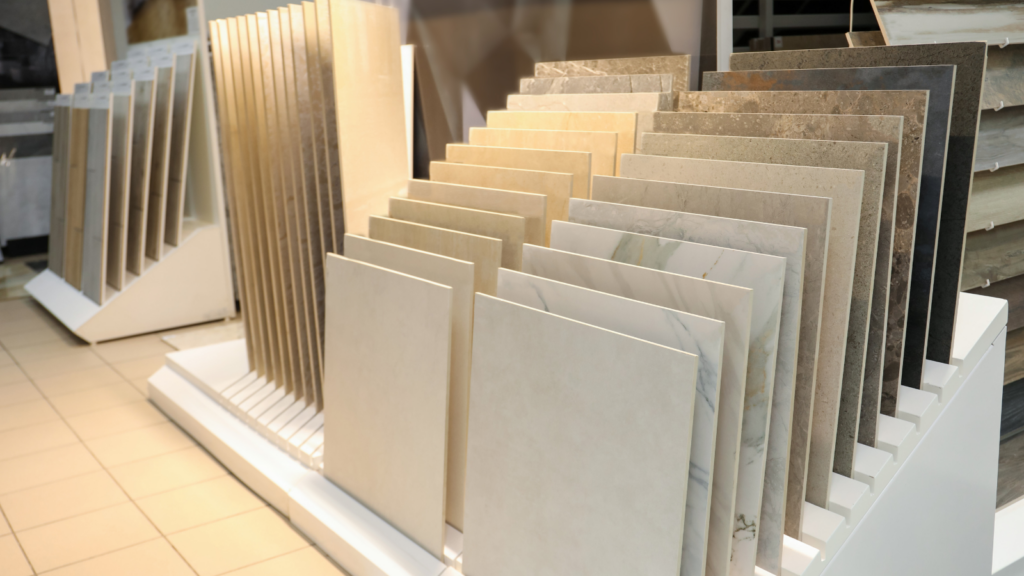
1. What Are Large Format Tiles?
Large format tiles are generally understood as tiles that cover a wider surface area than commonly used standard tile sizes.
Today, homeowners can find formats such as 600×1200 mm, 800×800 mm, 800×1600 mm and even larger slab-style options.
Depending on the specific tile range and manufacturer recommendation, these formats may be suitable for flooring, wall applications or both.
The main visual advantage is simple: larger tiles mean fewer individual pieces across the same area.
This can help create a more seamless and visually open look.
2. Choose Tile Size According to the Room
The biggest tile is not automatically the best tile.
Room dimensions should influence your decision.
A 600×1200 mm tile can work beautifully in many living rooms and bedrooms because it gives a large-format appearance without becoming extremely difficult to handle.
Larger formats such as 800×1600 mm can create a stronger visual impact in spacious living rooms, halls and commercial interiors.
Very large slabs can also work well for feature walls and statement surfaces.
Before choosing Large Format Tiles in Kerala, consider how many full tiles will fit into the room and how much cutting will be required around walls, doors and corners.
3. Large Tiles Can Reduce Visible Grout Joints
One of the main reasons customers prefer large-format tiles is the reduced number of grout joints.
For example, covering a large living-room floor with bigger tiles generally requires fewer individual pieces than using smaller tiles.
This can give marble-look, stone-look and concrete-look designs a more continuous appearance.
However, fewer joints does not mean no joints.
Tiles should still be installed with suitable grout joints according to the tile manufacturer’s and installation-system recommendations.
Trying to install tiles directly against each other can create installation problems later.
4. Check the Floor Before Installation
Large-format tiles need a properly prepared surface.
Small variations in the floor that may be less noticeable with smaller tiles can become more important when a much larger tile is placed across the same area.
The substrate should be:
Firm, clean, properly cured and reasonably flat.
If the floor is uneven, it may need preparation or levelling before tile installation begins.
This is especially important for Large Format Tiles in Kerala because correct support beneath the tile helps achieve a better finished surface.
5. Use the Correct Tile Adhesive
Large-format tile installation should not be treated exactly like every other tile installation.
The adhesive needs to suit:
Tile size, tile material, substrate, floor or wall application and installation conditions.
For larger tiles, achieving suitable adhesive coverage underneath the tile is particularly important.
In some installations, the fixing method may also include spreading adhesive across the rear surface of the tile as well as on the prepared base to improve overall contact.
Always check the adhesive manufacturer’s technical recommendations before installation.
6. Large Format Tiles Can Create Strong Feature Areas
Large-format tiles are not limited to floors.
They can be used to build striking design surfaces in spaces such as living rooms, TV walls, bedrooms, dining areas and selected bathroom walls.
Marble-look large-format tiles are particularly useful when the design includes continuous veins or patterns.
Because there are fewer interruptions from grout joints, the surface can create a stronger visual statement.
Before choosing a very large tile for a wall, however, check the wall condition, tile weight, adhesive specification and installation method.
7. Think About Cutting and Wastage
Large tiles can look beautiful, but room layout matters.
Imagine placing a very large tile inside a small or irregularly shaped room.
If several tiles need major cuts around corners, columns, doors or fixtures, material wastage can increase.
That is why tile quantity should be calculated after considering the actual laying pattern rather than simply adding a standard percentage to the floor area.
Before purchasing Large Format Tiles in Kerala, ask your installer to review the room measurements and proposed tile direction.
Which Tile Size Is Good for a Living Room?
There is no single correct size for every living room.
For many residential projects, formats such as 600×1200 mm can provide a good balance between a spacious look and practical installation.
Larger living rooms may also accommodate 800×800 mm, 800×1600 mm or other larger formats depending on the selected collection.
The best way to decide is to compare the tile against the actual dimensions of the room.
A tile that looks very large when viewed individually may look perfectly balanced once installed across a spacious floor.
Can Large Tiles Be Used in Bedrooms?
Yes.
Large-format tiles can create a clean and calm appearance in bedrooms, particularly when using marble, stone, concrete or subtle neutral designs.
The same tile used in the living room can sometimes continue into bedrooms to create visual continuity through the home.
However, the final choice should still depend on room size, furniture layout and personal design preference.
What About Bathrooms?
Large-format tiles can work very well on bathroom walls because fewer joints can create a cleaner appearance.
For bathroom floors, however, design is only one consideration.
Drainage, floor slope, grip and the location of the drain need to be planned carefully.
A very large floor tile can require more cutting around slopes and drainage points.
For this reason, the wall-tile size and floor-tile size do not necessarily have to be the same.
Large Format vs Regular Tiles: Which Should You Choose?
Choose large-format tiles when you want:
A cleaner, more continuous appearance, fewer visible grout joints and a stronger premium design effect.
Choose more conventional sizes when:
The room has many corners or cuts, the floor layout is complicated, installation access is limited or a smaller format works better with the design.
Neither option is automatically better.
The correct tile is the one that suits the room and installation conditions.
Installation Quality Matters
Large-format tiles require careful handling and installation.
The substrate should be properly prepared, suitable adhesive should be selected and the installer should achieve good contact beneath the tile.
Professional guidance is particularly important when working with very large or thin slab-type products.
Choosing an impressive tile but compromising on installation can affect the final result.
Explore Large Format Tiles at Floor Collections
Customers looking for Large Format Tiles in Kerala can explore different sizes, colours, finishes and designs at Floor Collections.
Our showrooms in Pattambi and Ottapalam offer tile options for living rooms, bedrooms, kitchens, bathrooms, feature walls and other residential and commercial spaces.
Customers can compare actual tile sizes and designs before deciding what works best for their room dimensions and interior style.
Floor Collections also offers tile adhesives, sanitaryware, bathroom fittings, waterproofing products and related solutions for new homes and renovation projects.
When choosing large tiles, don’t simply ask:
“Which is the biggest tile?”
A better question is:
“Which tile size works best for this particular space?”
That approach can give you a better-looking room, more practical installation and a result that suits your home for years to come.
Frequently Asked Questions
Are large-format tiles suitable for small rooms?
They can be, but the room layout should be checked first. If a large amount of cutting is required, a smaller tile format may sometimes be more practical.
Do large-format tiles make a room look bigger?
Larger tiles reduce the number of visible grout lines, which can make the overall surface feel less interrupted and visually more open.
Is 600×1200 mm considered a large tile?
It is commonly sold as a large-format tile size and is widely used for modern residential floors and wall applications.
Do large-format tiles need special adhesive?
The adhesive should be selected according to the tile size, tile type, substrate and installation area. Larger formats often need more careful adhesive selection and coverage than smaller conventional tiles.
Where can I explore Large Format Tiles in Kerala?
Customers can visit Floor Collections showrooms in Pattambi and Ottapalam to compare different large-format tile sizes, designs and finishes for residential and commercial projects.
