Jaquar Wall-Hung vs Floor-Mounted Toilet: Which One to Choose?
Choosing a Jaquar Toilet may look simple until you have to decide between a wall-hung WC and a floor-mounted model.
Both can work well in a modern bathroom, but they create very different installation requirements and day-to-day experiences. A wall-hung toilet can give you a cleaner-looking floor and a more minimal appearance, while a floor-mounted toilet may fit more naturally into conventional plumbing layouts.
The right choice therefore depends less on which style looks more premium and more on your bathroom size, plumbing stage, cleaning preference, installation plan and budget.
Jaquar’s current sanitaryware catalogue includes both wall-mounted and floor-mounted options, along with multiple WC ranges, finishes and trap configurations.
This guide will help you decide which type makes more sense for your bathroom.
Selecting the right Jaquar Toilet starts with understanding your bathroom size, drainage position and installation requirements.
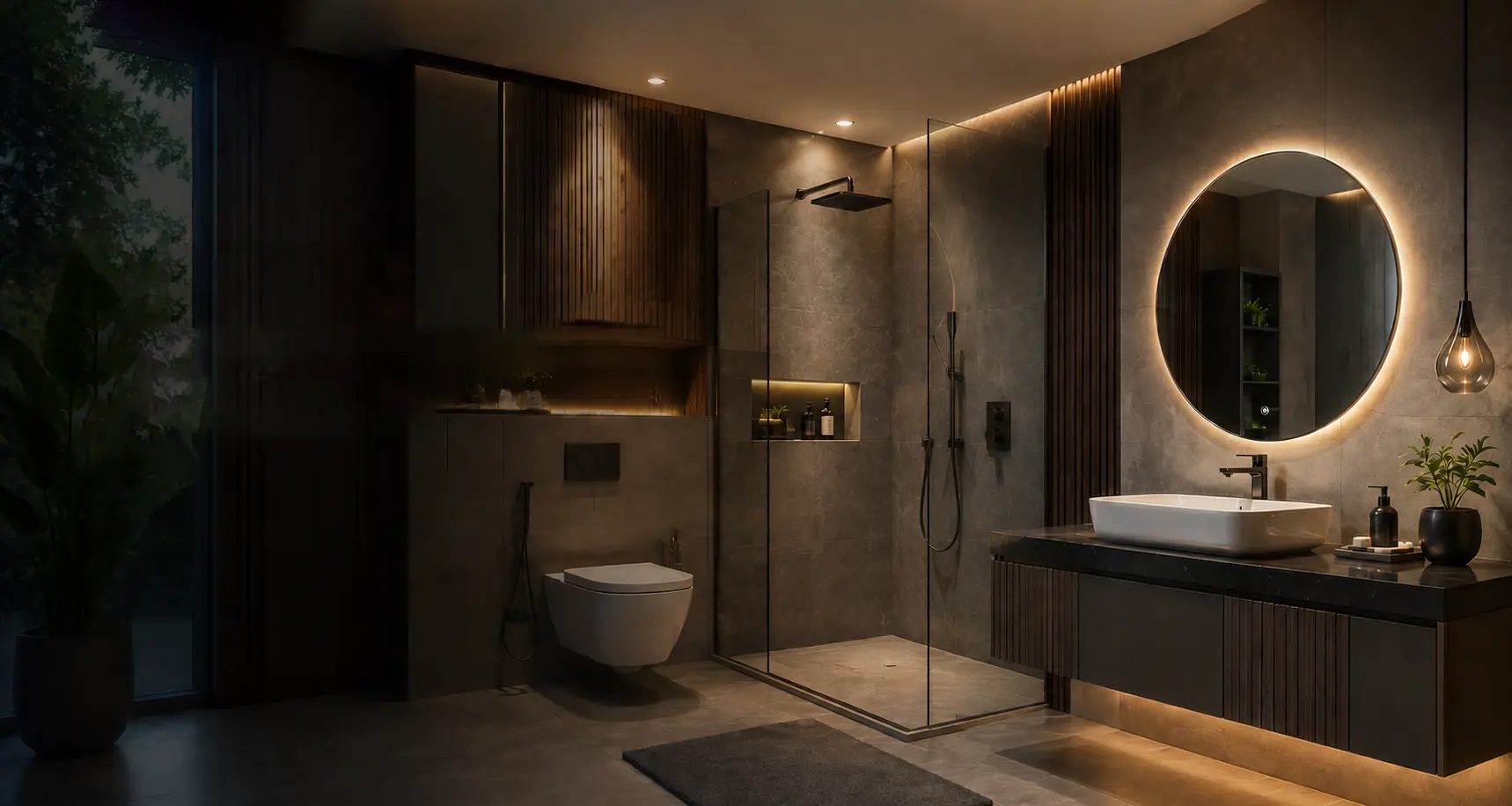
Wall-Hung vs Floor-Mounted Jaquar Toilet: Quick Comparison
| Factor | Wall-Hung Toilet | Floor-Mounted Toilet |
|---|---|---|
| Installation | Mounted to a concealed support/frame | Fixed to the bathroom floor |
| Floor visibility | More floor remains visible | Toilet meets the floor |
| Cleaning | Easier to clean beneath the WC | Cleaning around the base is required |
| Visual style | Minimal and contemporary | Conventional to contemporary |
| Plumbing planning | Best decided before wall finishing | Often easier with existing layouts |
| Cistern | Usually concealed | May be integrated or externally visible depending on model |
| Height flexibility | Can be planned during frame installation | Height largely determined by product |
| Renovation suitability | Depends heavily on wall/plumbing changes | Often easier where existing drainage is retained |
| Best for | Modern planned bathrooms | New builds and renovations with conventional layouts |
Now let’s look at the differences properly.
What Is a Wall-Hung Jaquar Toilet?
A wall-hung WC is fixed to a support system rather than resting directly on the bathroom floor.
The visible toilet bowl appears to project from the wall, while the support structure and flushing components are generally concealed behind the finished wall.
Jaquar’s current wall-hung catalogue includes standard wall-hung, rimless, blind-installation and tankless configurations across several sanitaryware ranges.
This design creates one of the biggest visual differences between the two toilet types:
you can see the floor continuing underneath the WC.
That can make a bathroom feel cleaner and visually less crowded.
What Is a Floor-Mounted Jaquar Toilet?
A floor-mounted WC sits directly on the bathroom floor and is fixed in place at its base.
This is the format many homeowners are already familiar with.
Jaquar’s current sanitaryware range includes floor-mounted and single-piece WC options in addition to wall-hung products.
Depending on the model, the toilet and cistern arrangement may be combined into a single-piece design or configured differently.
For many renovation projects, a floor-mounted toilet can be particularly practical if the existing drainage points are already suitable.
1. Which Option Is Better for a Small Bathroom?
This is where wall-hung toilets are often attractive.
Because the bowl does not visually meet the floor, more flooring remains visible. That can make a compact bathroom appear more open.
The concealed cistern can also remove the bulky appearance of a conventional exposed tank.
But there is an important distinction:
A wall-hung WC does not magically create unlimited space.
A compact Jaquar Toilet can also be a practical choice when every centimetre of bathroom space matters.
The frame and concealed cistern still require installation depth inside or against the wall.
So before selecting a Jaquar Toilet simply because the bathroom is small, check the actual finished dimensions of the complete installation.
For some compact bathrooms, a carefully selected floor-mounted model may still be the more practical choice.
2. Which Is Easier to Clean?
For many homeowners, this is one of the strongest arguments for a wall-hung toilet.
Because the WC is raised above the floor, a mop or cleaning cloth can pass underneath without working around a pedestal.
There is also no floor-level base surrounding the WC where dust and moisture can accumulate.
A floor-mounted toilet can still be straightforward to maintain, but cleaning has to be done around the base where the sanitaryware meets the floor.
So if easy floor cleaning is a major priority, the wall-hung format has a practical advantage.
3. Which Looks More Modern?
A wall-hung WC generally creates a more minimal appearance.
The concealed cistern, visible flush plate and floating bowl work particularly well with modern bathrooms that use:
- large-format tiles
- concealed plumbing
- clean vanity lines
- frameless shower glass
- minimal accessories
Floor-mounted sanitaryware, however, does not automatically mean traditional design.
Modern single-piece and rimless floor-mounted WCs can also create a clean contemporary bathroom.
So think about the entire room rather than deciding from the WC alone.
A well-proportioned floor-mounted toilet can look better than a wall-hung product that has been awkwardly fitted into an unsuitable space.
4. Installation Is Where the Biggest Difference Appears
This is probably the most important section of the article.
A wall-hung WC requires more planning before the wall is completed.
The support frame, concealed cistern, water connection, waste connection and flush plate location need to be coordinated correctly.
Jaquar’s flushing-system information describes frames designed to support wall-mounted sanitaryware; the company states that its applicable wall-hung frame can take loads of up to 400 kg.
That doesn’t mean every installation is automatically suitable.
The wall condition, frame selection and installation still need to follow the product specifications.
A floor-mounted WC is often more familiar to plumbers and can fit more easily into an existing bathroom where the drainage position is already established.
Practical rule
If you’re building a new bathroom, you have more freedom to choose either format.
If you’re renovating an existing bathroom, first check where the current soil pipe and water connections are located before deciding.
5. S-Trap or P-Trap Matters
This is something homeowners often overlook.
The WC cannot be selected purely by looking at its photograph.
Jaquar’s current sanitaryware catalogue filters products by both S-Trap and P-Trap, and its wall-hung catalogue currently lists P-Trap configurations for relevant products.
Your plumber should confirm the drainage arrangement before the WC is ordered.
Very simply, the important question is:
Where does the toilet waste outlet need to connect?
The answer determines which configuration and model will work.
Do not purchase the WC first and ask the plumber to “adjust everything somehow” afterwards.
6. What About Rimless Toilets?
You will see the term rimless frequently while browsing current Jaquar WC products.
Jaquar currently lists rimless wall-hung as well as rimless single-piece/floor-mounted products.
A traditional WC has a rim around the upper inner portion of the bowl.
A rimless design changes that geometry so there is less hidden rim area around which cleaning has to take place.
For a customer, the practical consideration is hygiene and cleaning accessibility.
However, remember:
Wall-hung vs floor-mounted describes how the toilet is installed.
Rimless vs conventional describes aspects of the bowl/flushing design.
They are different decisions.
You can therefore compare rimless options within whichever mounting style you prefer.
7. What Is Blind Installation?
Some current Jaquar wall-hung products are described as blind installation models.
In simple terms, this type of installation is designed so the mounting hardware is less visually exposed after installation.
The result is a cleaner exterior.
Before purchasing a Jaquar Toilet, ask your plumber to confirm the waste outlet, trap type and required plumbing arrangement.
For customers creating a highly minimal bathroom, details like this can contribute to the finished appearance.
But again, don’t select it based purely on terminology. Check the exact model, installation requirements and compatibility with the frame being used.
Is a Wall-Hung Toilet Difficult to Maintain?
This is a common concern:
“If the cistern is inside the wall, what happens if something needs servicing?”
A properly designed concealed system is intended to provide maintenance access through the service/flush-plate area rather than requiring the finished wall to be demolished for normal servicing.
The quality of installation is therefore extremely important.
Before closing the wall, make sure the plumber has installed the correct components and tested the system.
With concealed plumbing, good installation at the beginning is much more valuable than trying to fix shortcuts later.
Which One Is Better for a Renovation?
If you’re replacing an existing toilet without changing the bathroom structure substantially, a compatible floor-mounted WC may involve fewer modifications.
For example, if your existing waste outlet already suits the required floor-mounted configuration, keeping the plumbing arrangement can simplify the renovation.
Moving to a wall-hung WC may require:
a concealed frame, cistern arrangement, changed waste connection and additional wall work.
That doesn’t mean you shouldn’t do it.
When replacing an existing WC, choose a Jaquar Toilet that works with the current drainage layout wherever possible.
If you’re already completely renovating the bathroom, it may be the perfect opportunity.
But the decision should be included in the renovation plan before tiling and wall finishing.
Which One Is Better for a New Home?
For a new home, you have much greater freedom.
Because the bathroom plumbing has not yet been locked in, you can choose the toilet format according to the design rather than trying to work around existing points.
If you want:
a very minimal bathroom, easier floor cleaning and concealed plumbing, a wall-hung WC may be attractive.
If you want:
a simpler conventional installation while still having access to modern sanitaryware designs, a floor-mounted WC can make excellent sense.
There isn’t one correct choice for every new home.
Consider the Height and Comfort
People often compare toilets by width and length but ignore seat height.
Comfort can vary based on the users of the bathroom.
A wall-hung WC can offer some flexibility in setting the installation height during planning, subject to the frame and manufacturer’s installation requirements.
This can be useful when the bathroom is being designed around specific users.
For a floor-mounted WC, the final seat height is largely determined by the sanitaryware model itself.
If elderly family members will regularly use the bathroom, comfort and accessibility deserve more attention than styling trends.
Don’t Ignore the Flush System
When choosing a wall-hung Jaquar Toilet, you’re not choosing only the ceramic bowl.
You may also need to consider:
the concealed cistern, support frame, flush plate and compatible installation components.
Jaquar’s current flushing-system information describes dual-flush configurations and applicable in-wall systems designed for wall-mounted sanitaryware.
That means your budgeting should account for the complete WC installation, not only the visible bowl.
The same principle applies to floor-mounted models: understand what is included with the selected product and what additional components are needed.
So, Which Jaquar Toilet Should You Choose?
Choose a wall-hung toilet when your priorities are a minimal appearance, more visible floor space, easier cleaning underneath the WC and you’re comfortable planning the concealed installation properly.
Choose a floor-mounted toilet when you prefer a more conventional installation, want to work with an existing plumbing arrangement or simply find a floor-mounted design that better suits your bathroom and budget.
The decision becomes easier when you ask five questions:
How much space do I have?
Where is the drainage outlet?
Is this a new bathroom or renovation?
How important is easy floor cleaning?
Do I want a concealed or more conventional installation?
Answer those before comparing individual models.
Comparing each Jaquar Toilet by installation type, dimensions, cleaning convenience and comfort will make the final decision much easier.
Explore Jaquar Toilets at Floor Collections
The best way to compare sanitaryware is to look beyond online product photographs and understand the actual dimensions, shape and installation requirements.
At Floor Collections, customers can explore Jaquar sanitaryware through our Pattambi and Ottapalam showrooms, including wall-hung closets, floor-mounted options, wash basins, faucets and other bathroom solutions.
If you’re planning a new bathroom or renovation, our broader Jaquar Authorized Dealer in Kerala section can also help you explore the different Jaquar bathroom categories before narrowing down the products for your project.
The smartest choice is not automatically wall-hung or floor-mounted.
It is the Jaquar Toilet that fits your bathroom, your plumbing and the way your family will actually use the space.